- ELEV
- 11 ft
- COORD
- 66.8922° N · 162.6060° W
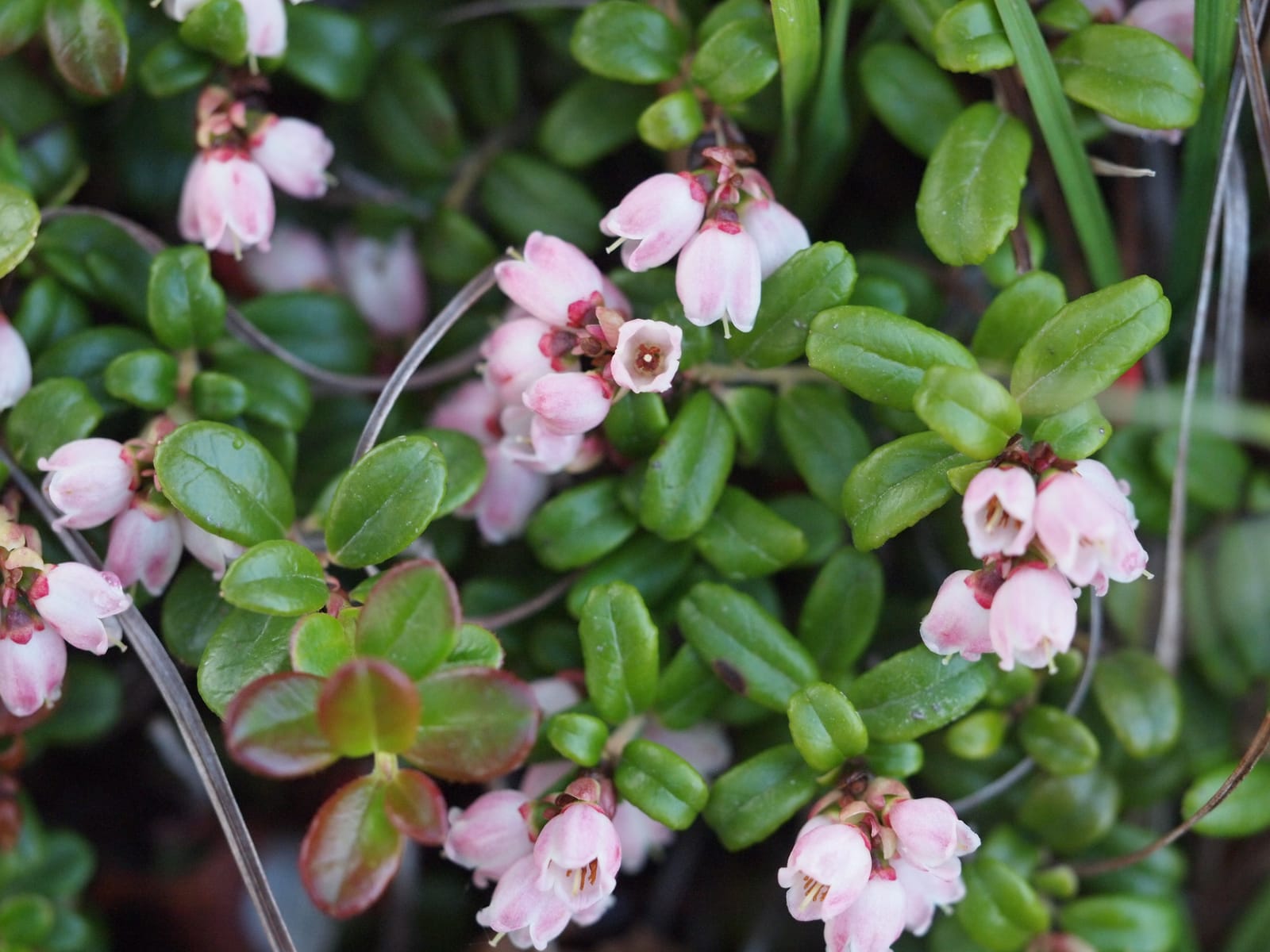
Lingonberry is known by many names.
This list includes the Lowbush Cranberry, Kikmiññaq or Kikmiñat (Iñupiaq), or Vaccinium vitis-idaea (scientific).
This plant is easily recognizable as it grows throughout the area. It grows low to the ground and boasts bright pink flowers in the spring and bright red berries in the late summer and fall. The berries are known for being tart when compared to other tundra berries. Although they can be eaten at almost any time, locals wait until after the first frost to pick lingonberry to allow for the flavor to fully develop.
Lingonberries have been proven to contain more antioxidants than commercially grown cranberries, increasing their health benefit. Lingonberries have been used traditionally for medicine as well. Chewing the berries can help a sore throat, headache, or relieve an upset stomach
While looking at the patch of Lingonberry, you may notice a few other plants growing along side of it. One of these such plants is tundra tea.
Tundra tea (Ledum palustre) grows abundantly in our area. You may also hear this plant referred to as Eskimo tea, Labrador tea, or Tilaaqqiuq (Iñupiaq). The plant boasts a cluster of small white or pinkish flowers and narrow green leaves on a long brown stem.
Medicinally, making a tea from the leaves is good for colds, inflammation, arthritis, and works as a laxative. Local wisdom either picking the leaves very young, or gatherings the leaves in the fall and winter after they have dried out as it changes the levels of certain chemicals in the leaves.
However, this plant contains ledol, a toxin known to cause unwanted symptoms such as diarrhea and drowsiness if used in excess. This plant should only be used in moderation. It is not suggested for those with diabetes or heart conditions.
Sources:
Jones, Anore. Plants That We Eat: Nauriat Nigiñaqtuat . Univ. of Alaska Press, 2010.
Garibaldi, Ann. Medicinal Flora of the Alaska Natives: a Compilation of Knowledge... Alaska Natural Heritage Program, Environment and Natural Resources Institute, University of Alaska Anchorage, 1999.
Schofield, Janice J. Discovering Wild Plants: Alaska, Western Canada, the Northwest . Alaska Northwest Books, 1995.
15°F warmer than normal todayPressure Steady →
Observed at Ralph Wien Memorial Airport, under 1 mi away, 7:00 AM AKT. Source: National Weather Service.
No current alerts from the National Park Service. nps.gov/kova
- VISITOR CENTERNorthwest Arctic Heritage Center1 mi NEThe Northwest Arctic Heritage Center is open year round.
Place information, alerts and photos: National Park Service (U.S. Government work). Weather: National Weather Service. Elevation: USGS. Map: Google Maps. US Road Cams is not affiliated with the National Park Service.