- ELEV
- 8,095 ft
- COORD
- 37.7445° N · 105.5254° W
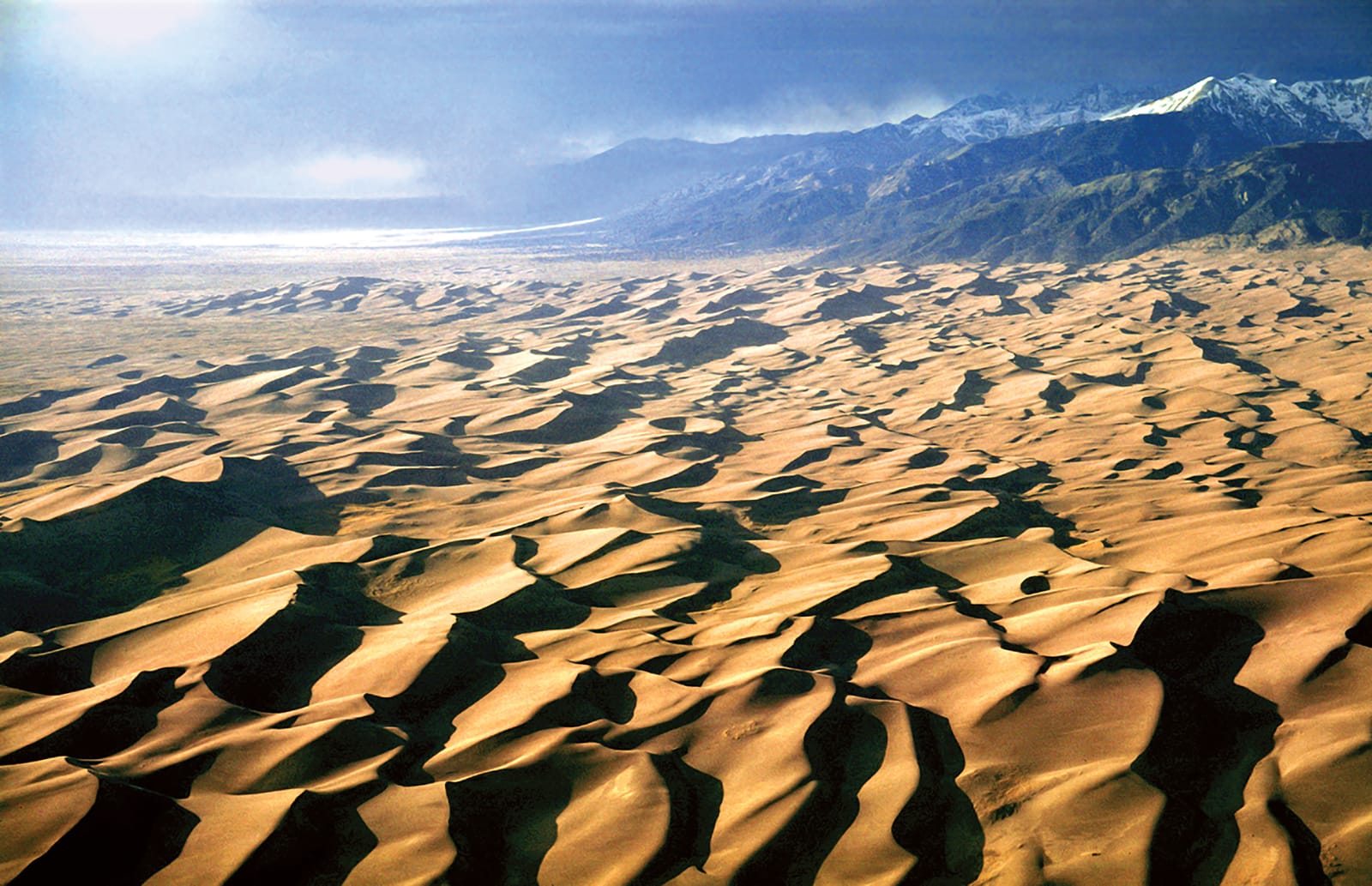
The centerpiece of Great Sand Dunes National Park and Preserve is the 30-square-mile (78-square-km) dunefield, featuring the tallest dunes in North America.
Because there are no trails, you can venture out anywhere you'd like to discover unusual insects, plants, wildlife tracks, ripples, and sand grains of every color. In warmer months, watch for one of 7 species of endemic insects, found nowhere else in the world, that are specially adapted to the extreme environment here.
During summer, plan your dunes time for early morning or evening to avoid sand surface temperatures of 150 degrees F, or thunderstorms with lightning and wind. From November through April, snow falls on the dunes about once per week, and cold temperatures prevail. Wind is possible in any season, mainly whenever storm fronts are coming or going. Spring is the windiest season, especially in the afternoon.
Wear sturdy footwear year round; boots with long pants work best to keep sand out of your shoes.
It's very difficult for an adult to get lost in the dunes, because you can see the mountains, entrance road, and visitor center for reference. But children can wander away and become disoriented. Watch children closely, especially when there are larger crowds.
No current alerts from the National Park Service. nps.gov/grsa
- VISITOR CENTERGreat Sand Dunes Visitor Center1 mi SECurrent visitor center hours are 9-4:30 daily throughout the year.
- CAMPGROUNDPiñon Flats Campground1 mi EOpen April through October, closed November through March.
- VISITOR CENTEREntrance Station1 mi SThe Entrance Station is most days in the busy season from May through September, and intermittent hours at other times of year.
Place information, alerts and photos: National Park Service (U.S. Government work). Weather: National Weather Service. Elevation: USGS. Map: Google Maps. US Road Cams is not affiliated with the National Park Service.