- ROAD
- Highway 24
- ELEV
- 6,504 ft
- COORD
- 38.4836° N · 111.3651° W
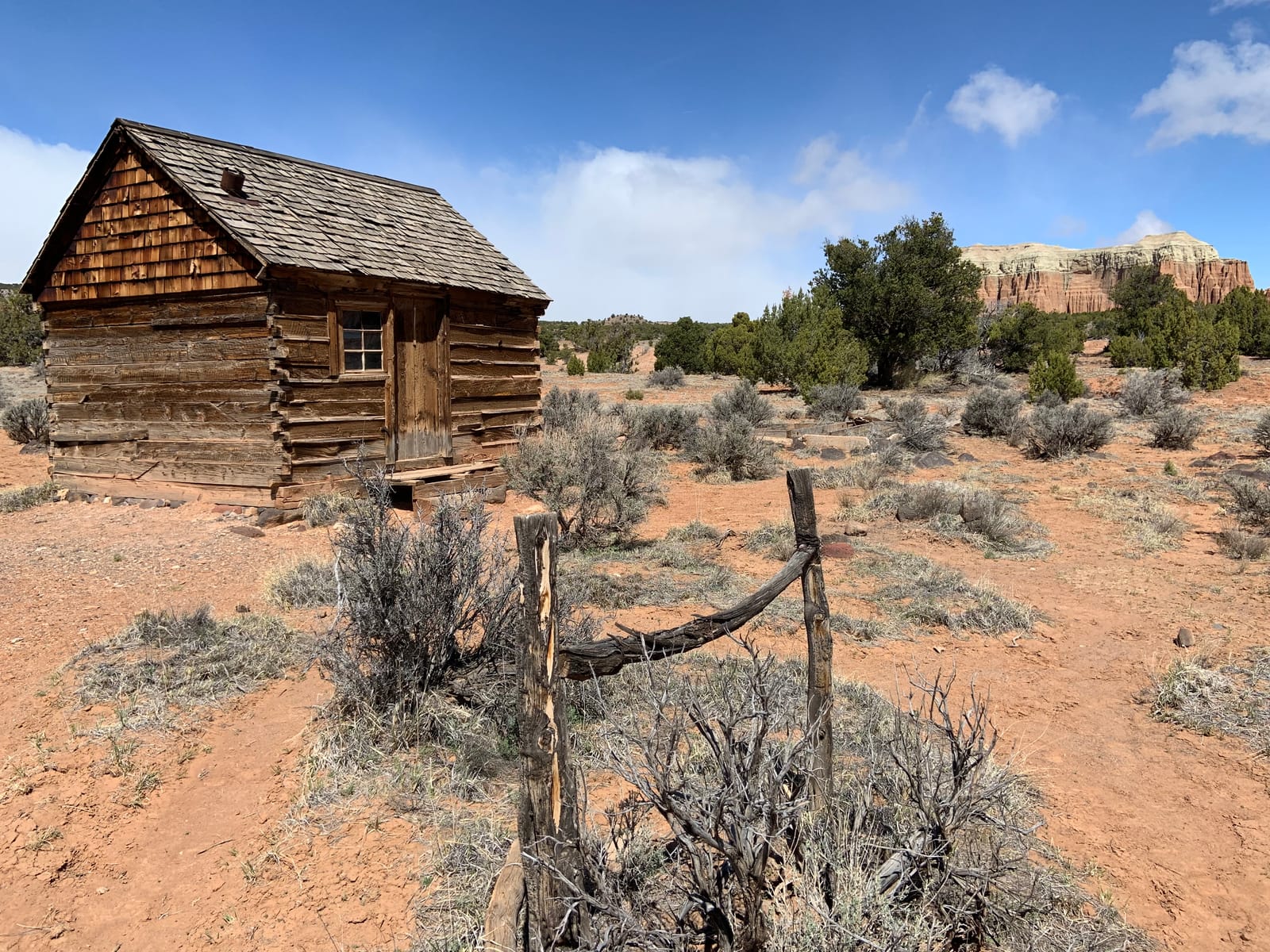
The Lesley Morrell Line Cabin and Corral are some of the best-preserved resources representing ranching in Capitol Reef National Park.
They exemplify the type of range improvements that became common in the two decades before World War II.
According to the Morrell family, the cabin was built in the 1920s on Lake Creek (Thousand Lake Mountain) by Paul Christensen. It was a summer house for his family at their sawmill. Around 1935, Christensen gave up his sawmill and sold the cabin to Morrell, a local cattleman. Morrell took apart and moved the cabin to Cathedral Valley , where he reassembled it on its present location. The building served as winter camp for Morrell's cowboys until 1970, when the family sold the cabin to the National Park Service.
The Lesley Morrell Cabin was constructed during a time of drought and high livestock numbers. In a desert environment, the land couldn't support so many animals. Wide-spread damage from overgrazing made ranching unprofitable. The 1934 Taylor Grazing Act's goal was to deal with this environmental problem and make ranching profitable again.
Before the Taylor Grazing Act, huge roaming herds of cattle and sheep competed for scarce forage and grass in the Capitol Reef area. After 1934, a permit system divided the federal, public land into grazing allotments. These allotments were leased to local cattlemen by the Department of the Interior. It was hoped that local ranchers would be the most responsible and sensitive to environmental considerations. The permit system ended the era of wide-ranging, nomadic livestock grazing. The same ranchers now grazed in the same ranges from year to year. This new situation led to the construction of new wells and corrals, as well as line shacks, like the Morrell Cabin.
Have a Safe Visit
The Morrell Cabin is not accessible by vehicle. It is a short (0.4 miles/0.6 km roundtrip), easy walk from the road to the cabin. Download a map of Cathedral Valley trails .
This short hike begins 1.8 miles (2.9 km) north of the junction of the Hartnet and Cathedral Roads, at the base of a series of steep, rocky switchbacks, approximately 28.1 miles (45.2 km) from Highway 24 (via the Cathedral Road). Park to the side of the road and follow the path 0.2 mile (0.3 km) to the historic cabin. The trail crosses a wash that may have shallow flowing water. Visitors may peer through the windows to see the interior. To the south are the remains of a small corral near the edge of a nearby wash.
The Cathedral and Hartnet roads (passable only to high-clearance vehicles; four-wheel drive often recommended) provide access to the cabin. Roads in this area are maintained infrequently and are not plowed in winter. Some sections of road cross areas of bentonite clay, which becomes impassable when wet. Deep, soft sand may also exist on roads. Roads may occasionally require four-wheel drive, and may quickly become impassable due to wet weather.
At the south end of the Hartnet Road near Highway 24, vehicles must ford the Fremont River ; there is no bridge over the river. Do not attempt to cross the river during floods or other periods of high water. Ask at the visitor center about river ford conditions or call 435-425-3791. Press 1 for more information; press 4 for road conditions.
Check this weather forecast specifically for Cathedral Valley and road reports before departing. Be prepared for changing conditions. Let others know your travel plans, especially when exploring remote areas. Carry extra food, water, and appropriate clothing. Stay hydrated, and limit exposure to desert sun. Have a self-rescue plan. Beware of storms that may cause sudden flash floods, and avoid travel in narrow canyons if rain is approaching. Do not walk or drive across flooded roads or trails - play it safe and wait until floodwaters subside. You are responsible for your own safety .
Elsewhere in the park
Information Gifford House Closed for the Season
The Gifford House is closed for the season. It will open for the 2027 season on Pi Day, March 14, 2027.
NPS · checked Nov 22, 11:07 PM MT · Details
Information Visitor Center Holiday Hours and Closures
The Capitol Reef visitor center will have shortened hours or be closed for the following holidays: November 25 closing at 1 pm. November 26, closed. December 24 and 25, closed. December 31 closing at 1 pm. January 1, closed.
NPS · checked Nov 22, 11:07 PM MT
Information Special Event: September 19 and 25, 2027 Scenic Drive temporary closure
Reef Ride Bike Days: For this special event the Scenic Drive will be open to bicycles and pedestrians only for part of the day on Saturday, September 18 and Saturday, September 25, 2027. The road will be closed to vehicles from sunrise to 3pm to allow for bicycles and pedestrians to enjoy the road at a more leisurely pace. The Fruita area and main road through the park (UT highway 24) - will remain open and unaffected by this closure.
NPS · checked Nov 22, 11:07 PM MT · Details
This does not affect Highway 24 or Lesley Morrell Line Cabin. Alerts are matched by road name; check nps.gov to be sure.
Entrances
- Capitol Reef West Entrance Pulloff 11 mi SCLOSED
- Capitol Reef East Entrance Wayside 19 mi SECLOSED
Highway cameras on the way in
- CAMPGROUNDPrimitive campsites at Cathedral Campground1 mi S
- VISITOR CENTERCapitol Reef National Park Visitor Center14 mi SEVisitor Center is open daily with the exception of some major holidays.
- CAMPGROUNDFruita Campground15 mi SEThe campground is open year round.
Place information, alerts and photos: National Park Service (U.S. Government work). Weather: National Weather Service. Elevation: USGS. Map: Google Maps. US Road Cams is not affiliated with the National Park Service.