- ELEV
- 1,975 ft
- COORD
- 29.2018° N · 102.9748° W
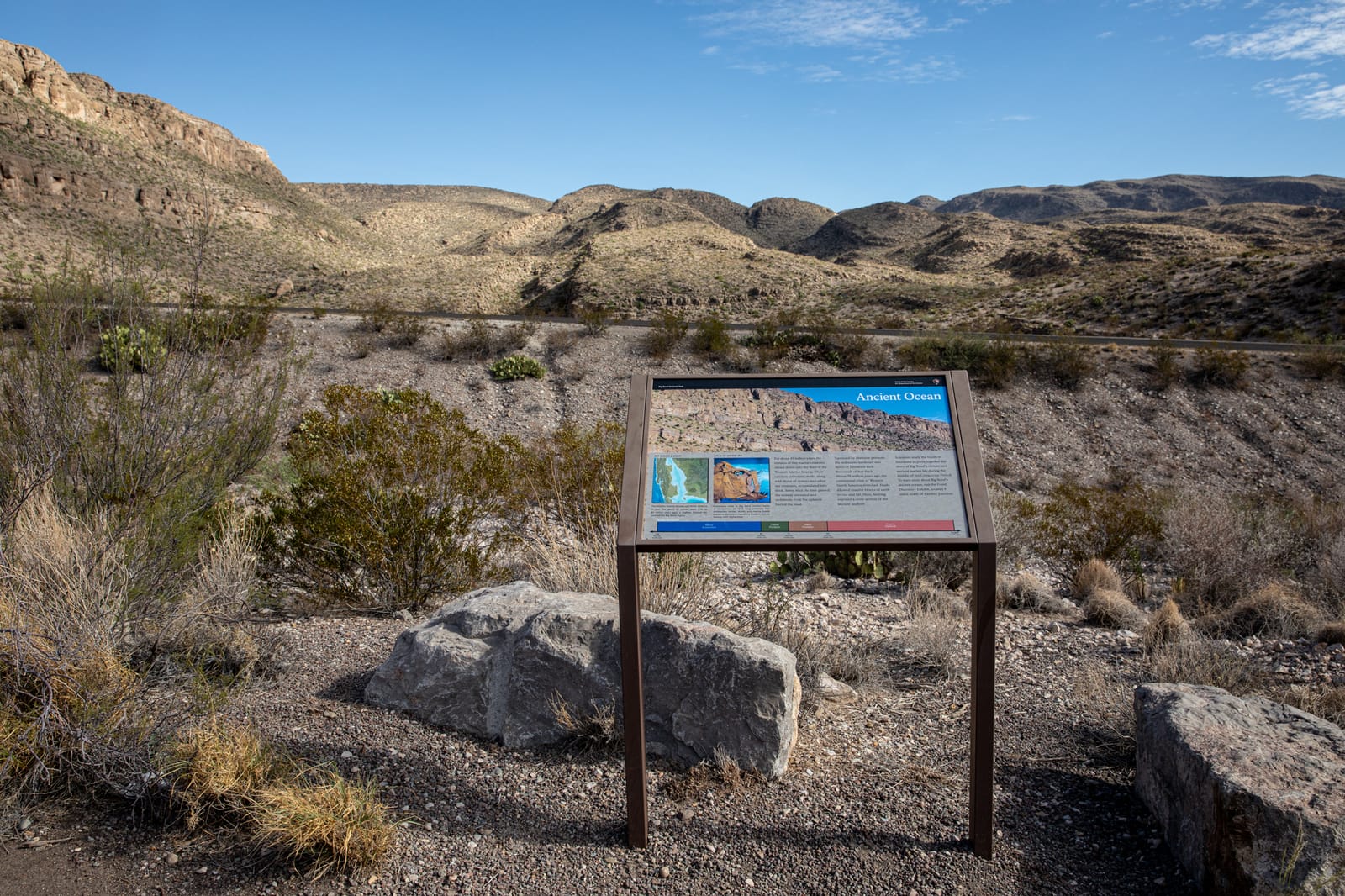
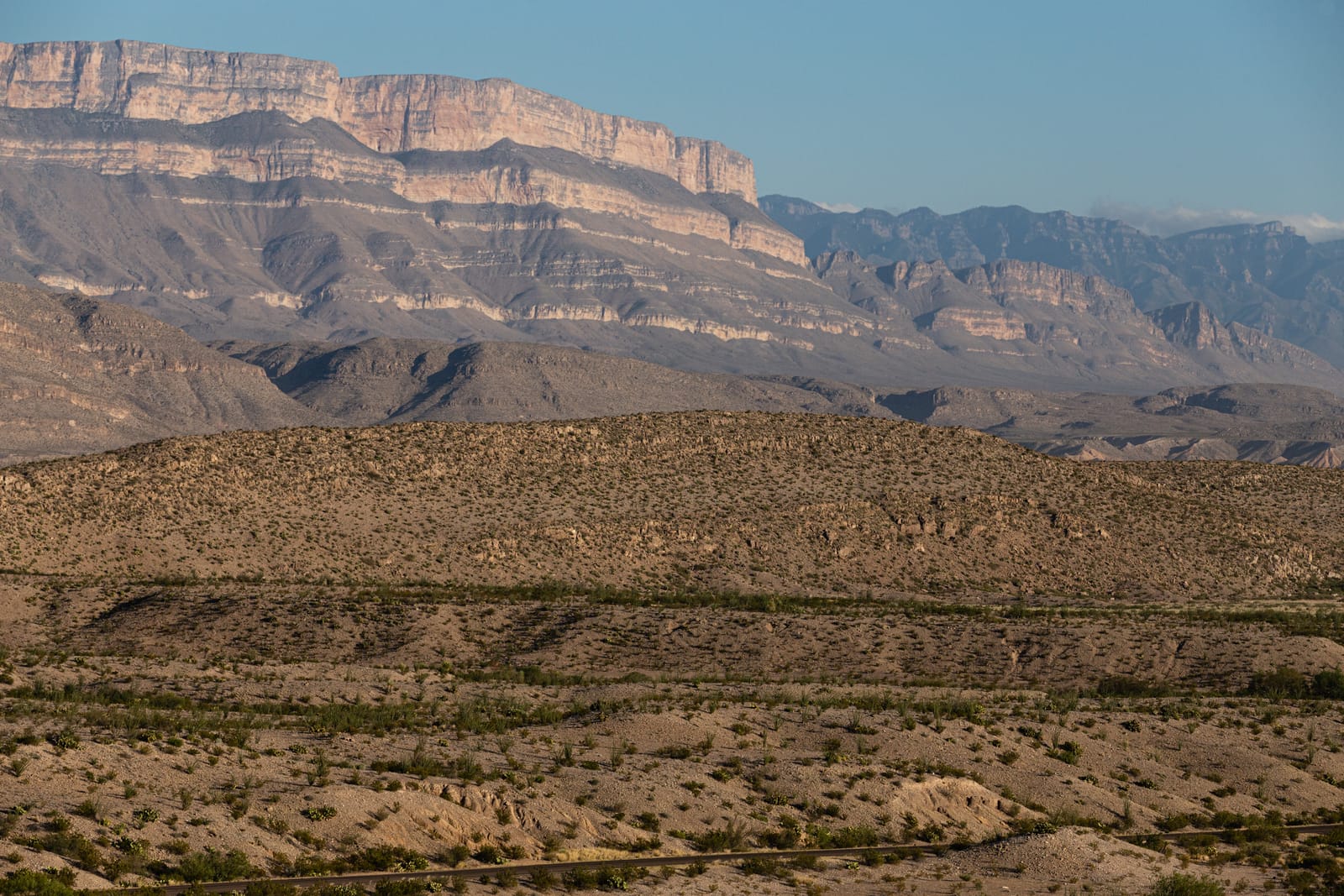
This exhibit discusses the ancient marine fossils found in the limestone mountains around Rio Grande Village.
Stop at this pullout to enjoy the view and learn more about Big Bend's geologic past.
The text on the exhibit sign reads:
"For about 47 million years, the remains of tiny marine creatures rained down onto the floor of the Western Interior Seaway. Their calcium carbonate shells, along with those of oysters and other sea creatures, accumulated into thick, limey mud. As time passed, the seaway retreated and sediments from the uplands buried the mud.
Squeezed by immense pressure, the sediments hardened into layers of limestone rock thousands of feet thick. About 20 million years ago, the continental crust of Western North America stretched. Faults allowed massive blocks of earth to rise and fall. Here, faulting exposed a cross section of the ancient seafloor.
Scientists study the fossils in limestone to piece together the story of Big Bend's climate and ancient marine life during the middle of the Cretaceous Period. To learn more about Big Bend's ancient oceans, visit the Fossil Discovery Exhibit, located 8 miles north of Panther Junction."
No current alerts from the National Park Service. nps.gov/bibe
Entrances
- Maverick 33 mi W
- Persimmon Gap 35 mi N
- VISITOR CENTERRio Grande Village Visitor Center1 mi SEOpen seasonally, November 1 through April 30, 9:00am-4:00pm.
- CAMPGROUNDRio Grande Village RV1 mi SEOpen year round.
- CAMPGROUNDRio Grande Village Campground2 mi SEOpen year round.
Place information, alerts and photos: National Park Service (U.S. Government work). Weather: National Weather Service. Elevation: USGS. Map: Google Maps. US Road Cams is not affiliated with the National Park Service.