- ELEV
- 62 ft
- COORD
- 44.3629° N · 68.2078° W
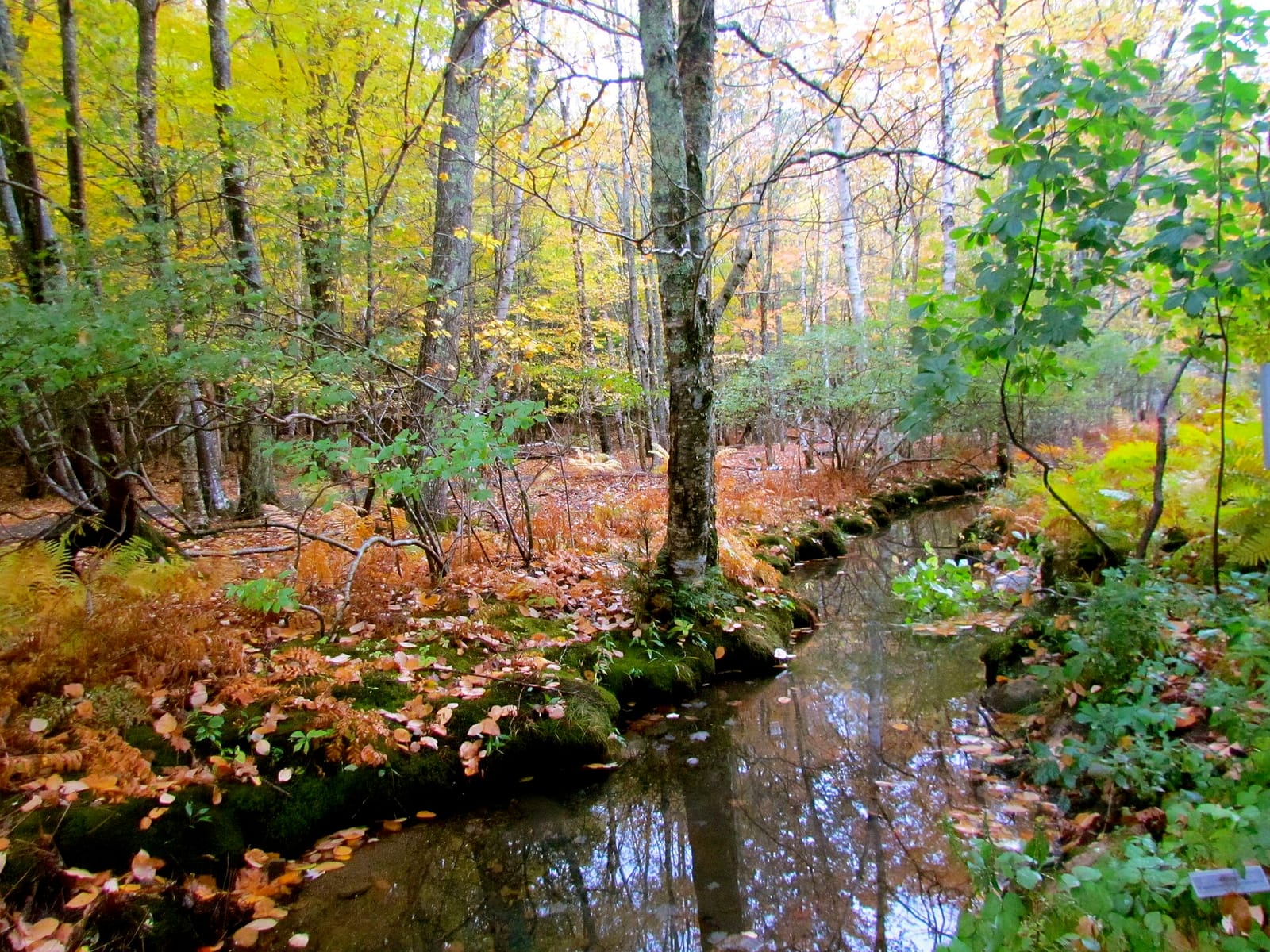
At the Wild Gardens of Acadia, you can see over 400 native plant species in thirteen sections designed to represent natural plant communities found within Acadia National Park.
Habitats such as mountain, heath, seaside, coniferous forest, and nine others are represented. The gardens serve as a living field guide and educational resource to familiarize one with native vegetation. All plants are labeled and grouped by habitat. The gardens are open seasonally every morning until dusk. There is no additional fee to view the gardens; you only need your park entrance pass.
History of Wild Gardens of Acadia
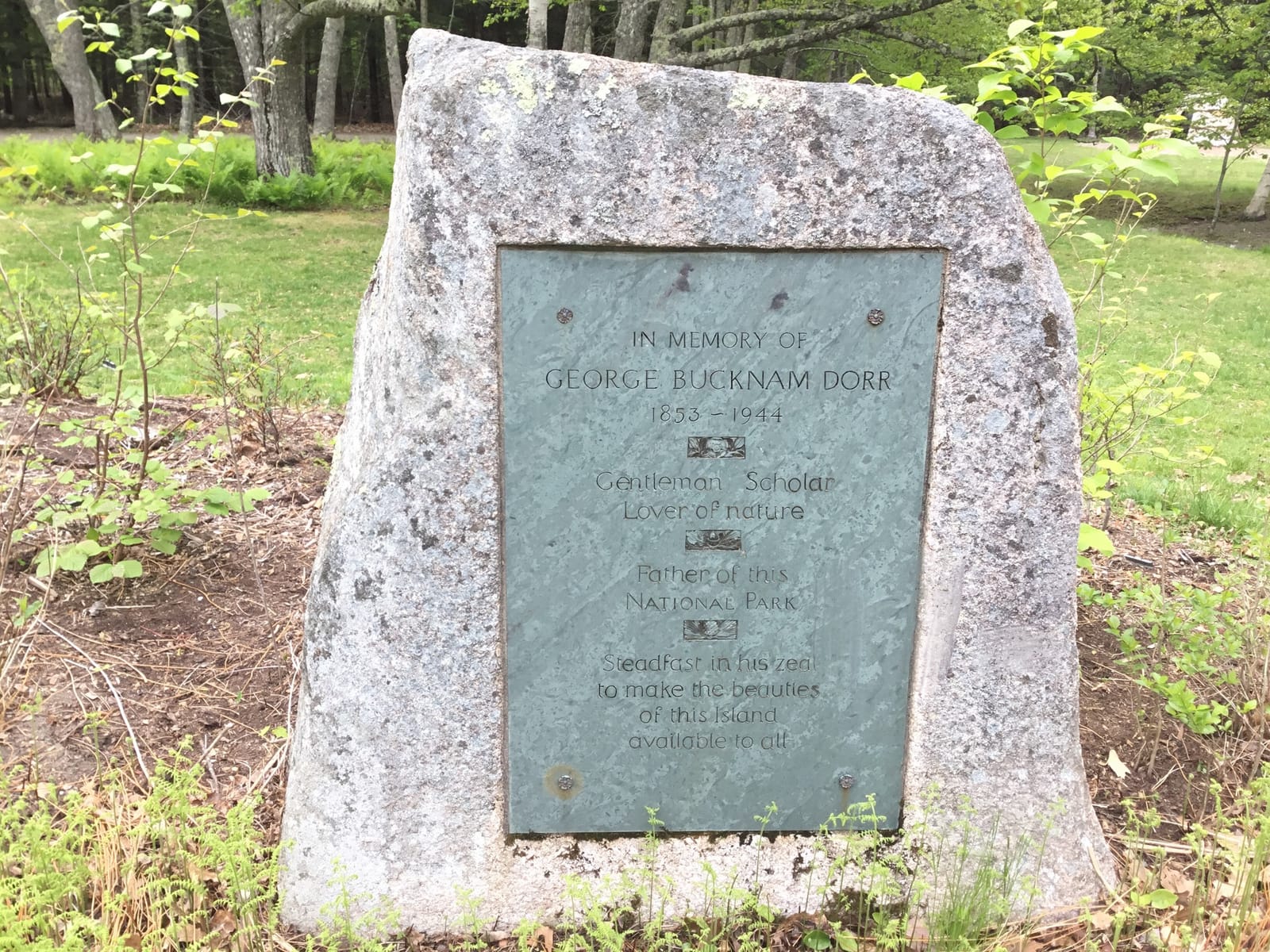
In the early 1900s, Charles W. Eliot and George B. Dorr recognized the natural beauty of Mount Desert Island and the need for its preservation. Dorr purchased the Sieur de Monts Spring area in 1909 and named it the Wild Gardens of Acadia.
On July 8, 1916, Sieur de Monts National Monument was established, and at this time encompassed 6,634 acres, including four lakes and ten mountains, within a contiguous boundary. George Dorr was appointed the park’s first superintendent, and that same year formally established the Wild Gardens of Acadia Corporation to acquire land for public use and for educational study and scientific research. He placed his private holdings in the corporation which included the Sieur de Monts Spring parcel and much of the Great Meadow, with the
intention of donating them to the monument at a future date. Notably, the monument’s boundary did not include the Tarn, which had been transferred to the Trustees in May of the previous year.
In 1918, the Wild Gardens of Acadia was recognized by the American Society of Landscape Architects. The following year, on February 16, 1919, Sieur de Monts National Monument became Lafayette National Park. Over the years, Dorr had apparently begun surveys for a “garden approach” to the entire Sieur de Monts Spring area. This approach corresponds to a 1926 donation of a north-south linear tract of land (Tract 11-114) that was conveyed from the Wild Gardens of Acadia Corporation, Sieur de Monts Spring Company, and George Dorr to the U.S. Government on May 1, 1926.
On August 11, 1930, Tracts 11-113 (120.3 acres) and 11-120 (25.7 acres) encompassing the Great Meadow and the Sieur de Monts Spring area were transferred from George Dorr and the Wild Gardens of Acadia Corporation to John D. Rockefeller, Jr. Land and easements associated with the Museum property, Tract 11-121 (2.3 acres), were transferred from the Sieur de Monts Spring Company to Lafayette National Park Museum of Stone Age Antiquities on July 22, 1930. On August 12, 1930, this same land and easements, and the right for
expansion, was conveyed to the U.S. Government. Nearby, Tract 12-107 (32 acres) that encompassed the Tarn was transferred from the HCTPR to the U.S. Government on July 22, 1931 (Land Ownership Record, 1944).
Over time, various attempts by Dorr and others led to multiple plans for paths and gardens in this area. In 1961, Superintendent Harold A. Hubler offered space to the Bar Harbor Garden Club to develop an exhibition garden dedicated to the display and propagation of the island’s native wild flowers. The gardens and their winding gravel paths were laid out just north of the spring building [Nature Center] amongst “a tangle of maples and blackberries” damaged in the 1947 fire. The project gestured to the many wild gardens plans envisioned by George Dorr. As part of the arrangement, the park agreed to maintain the irrigation system and provide supplies. In 1985, the Wild Gardens of Acadia was acknowledged as a “Significant Contribution to Horticulture” by the Garden Club of America.
In 2010, the Wild Gardens of Acadia became an official committee of Friends of Acadia and formalized this new standing through a partnership with Friends of Acadia and Acadia National Park—ensuring continued success and support from the park as an educational resource. The Wild Gardens of Acadia committee received the park's Partnership Award in 2011 in recognition of the “Wild Gardens of Acadia Volunteers for 50 years of devoted stewardship” from the National Park Service.
Pressure Steady →
Observed at Bar Harbor, Hancock County-Bar Harbor Airport, 10 mi away, 7:15 AM PT. Source: National Weather Service.
Elsewhere in the park
- Park ClosureEastern Section of Beech Mountain Loop Trail Closed for Repairs
Starting Sept 21, the eastern section of the Beech Mountain Loop Trail will be closed for repairs from a junction just beyond the parking lot to just below the summit at the fire tower. Three alternate routes to the summit are available: the outer loop of the Beech Mountain Loop Trail, Beech South Ridge Trail and Beech West Ridge Trail.
NPS · checked Nov 23, 10:07 AM ET
This does not affect the road or Wild Gardens of Acadia. Alerts are matched by road name; check nps.gov to be sure.
Entrances
- Entrance Station on Acadia's Park Loop Road 2 mi SEOPEN
Park webcams
National Park Service- VISITOR CENTERSieur de Monts Nature Center1 mi SSieur de Monts Nature Center is open 9 am to 5 pm June 14 through Oct 12, 2026.
- VISITOR CENTERWinter Information: Bar Harbor Chamber of Commerce2 mi NHours are 8 am to 4 pm, daily, typically from Nov 1 into early May.
- VISITOR CENTERHulls Cove Visitor Center4 mi NWOur summer season serving visitors at the Hulls Cove Visitor Center typically spans from the first week of May to the end of October.

Place information and alerts: National Park Service (U.S. Government work). Photo: Wikimedia Commons (credit and license under the photo). Weather: National Weather Service. Elevation: USGS. Map: Google Maps. US Road Cams is not affiliated with the National Park Service.